
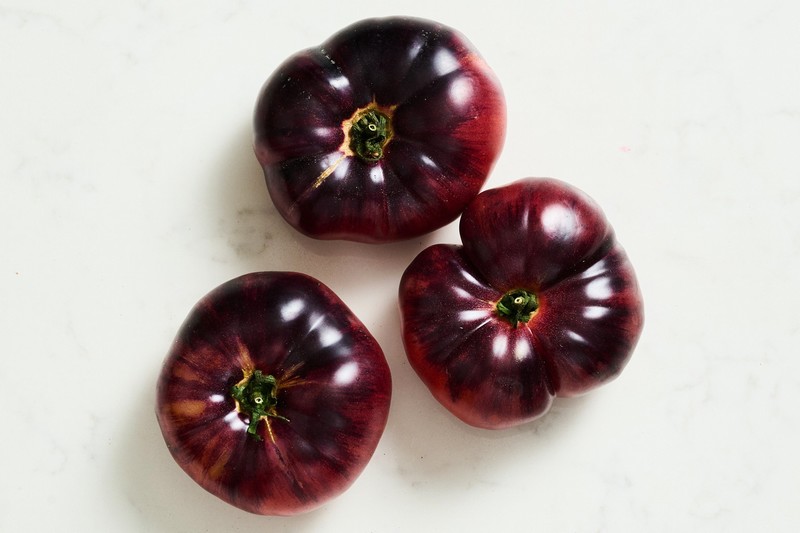
Purple Tomato
£5.30
In stock
“Heirloom tomatoes are open-pollinated “true breeding” tomato plants. Let’s take a look at what that means.
Open-pollination plants are plants whose pollination occurs naturally, meaning either self-pollination or through pollinators like bees and butterflies. Technically, hand-pollinating also counts as open-pollination, because you are simply taking the jobs of bees and butterflies and doing it yourself.
Open-pollination plants breed true, or grow “true to type. ” That means that the seeds collected from an heirloom tomato will grow plants similar to their parent plants, the same way naturally born children are genetically similar to their birth parents.
Heirloom tomatoes don’t just look and taste fantastic, they are also great for your health because they haven’t been bred with a philosophy that prioritizes commercialization to nutrients and quality, and also because they have lycopene. According to Healthline, lycopene has various health benefits, from heart health to cancer prevention, chronic disease prevention, and more.
In general, heirloom tomatoes are sweeter than other tomato varieties. There is also an interesting association to be made between the colour of heirloom tomatoes and their flavour—it isn’t an exact science and there are exceptions.
Still, it is something to keep in mind next time you go heirloom tomato shopping! Yellow Heirloom Tomatoes: they tend to have milder tastes with less acidity.
Orange Heirloom Tomatoes: another sweeter variety with low acid content. Pink Heirloom Tomatoes: usually the sweetest tomato variety, with a good balance between acidity and sugar content.
Black Heirloom Tomatoes: more of a maroon or purplish colour; these tomatoes usually have an earthier taste that some people even call smoky. Red Heirloom Tomatoes: often mistaken for your average grocery store hybrid tomato, these guys have strong flavours that lean more towards acidity than sweetness.
Striped Heirloom Tomatoes: not just eye-catching, but also tongue-catching with their very sweet and juicy taste. “.
Related products
-
 On Backorder
-
 On Backorder
-
 On Backorder
-
 On Backorder


